

Algebraic Notation Multiplication Terms Made Simple - Easy Algebra • 11 pages



Explore Easy Algebra with a focus on multiplication terms in algebraic notation. Learn how to write and understand expressions —perfect for beginners!
Algebra becomes much easier once you understand how numbers and letters work together. In this lesson, we focus on algebraic notation and, in particular, how multiplication is written and simplified when working with algebraic terms.
The lesson is designed to help you move from simple multiplication to expressions such as 3x × 2x with a clear understanding of what each step means.
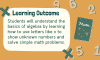
After completing the lesson, you should be able to:
Understand how letters such as x, y, and a can represent numbers.
Write multiplication in standard algebraic notation.
Multiply the numerical parts of algebraic terms.
Multiply variables and use exponents correctly.
Simplify products such as 3x × 2x and 4a × 2a.
In algebra, a letter can represent a number whose value may be unknown or may change.
For example:
x
can represent an unknown number.
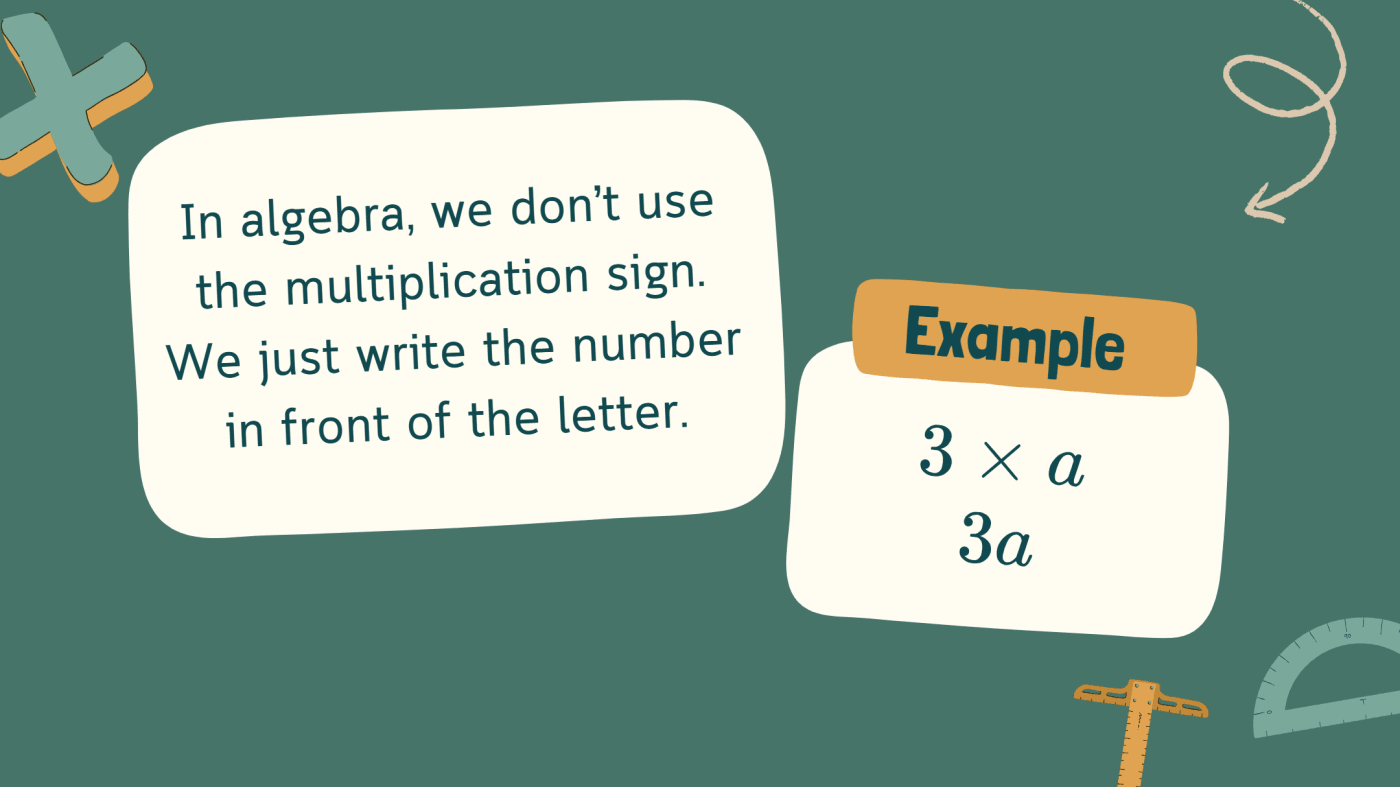
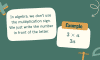
When a number is multiplied by a variable, we normally leave out the multiplication sign:
3 × x = 3x
Here, 3 is the coefficient and x is the variable.
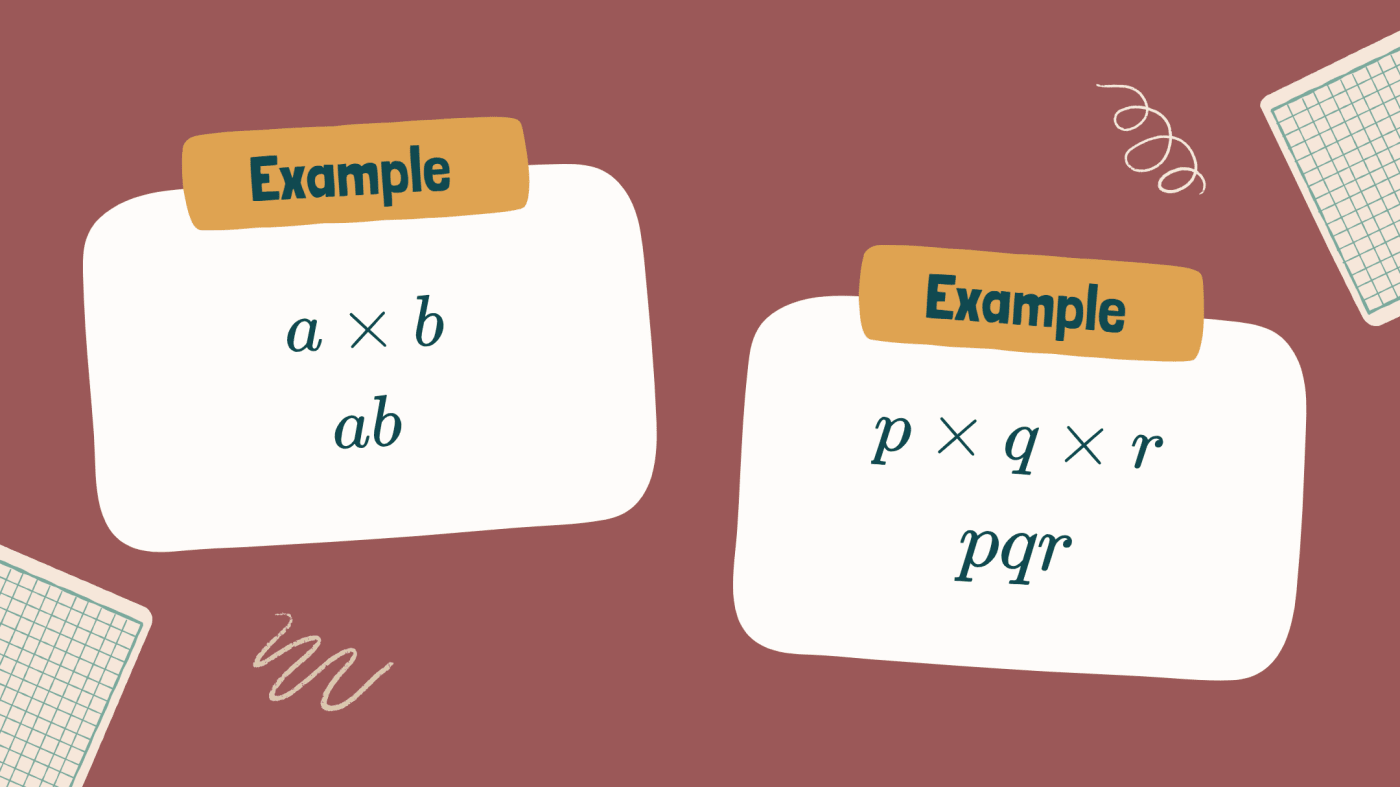
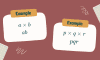
The same notation works with more than one variable:
2 × a × b = 2ab
This shorter notation makes algebraic expressions easier to read and work with.
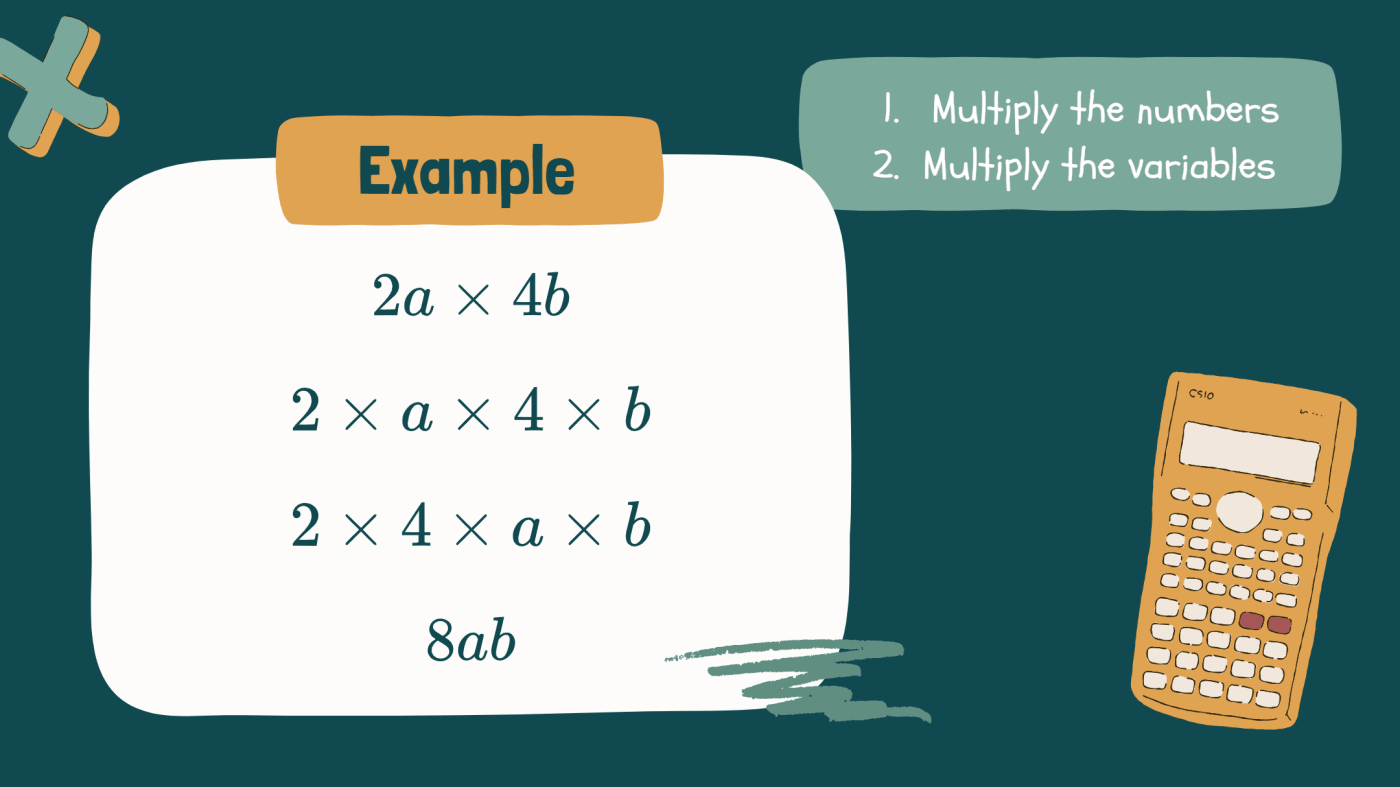
When multiplying terms, it helps to separate the numbers from the variables.
Consider:
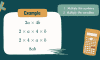
2 × 4x
First multiply the numerical parts:
2 × 4 = 8
So:
2 × 4x = 8x
Now consider:
3x × 2x
Multiply the coefficients:
3 × 2 = 6
Then multiply the variables:
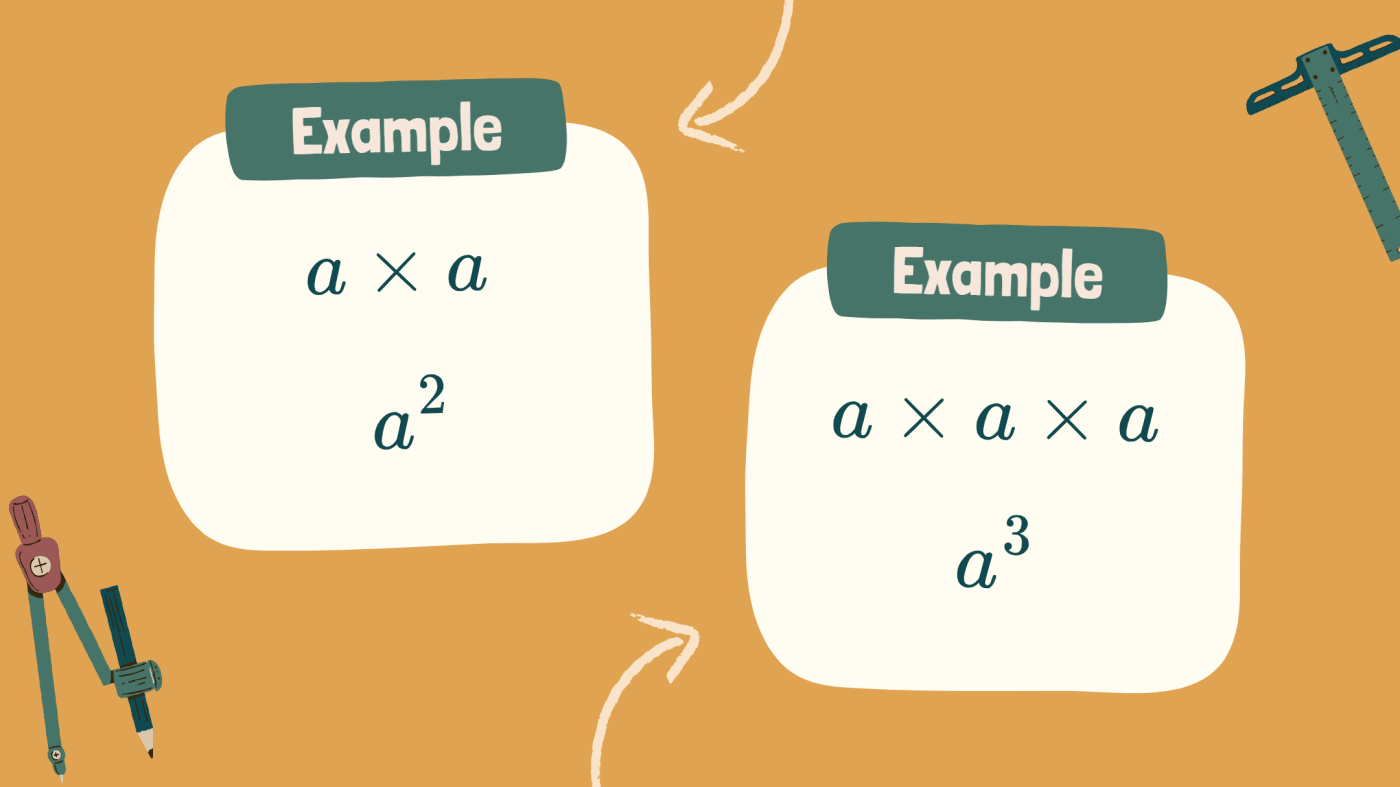
x × x = x²
Therefore:
3x × 2x = 6x²
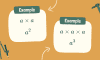
The exponent tells us that x has been used as a factor twice:
x × x = x²
This idea becomes especially important when working with algebraic expressions later.
Not every variable can be combined into a square.
For example:
2x × 3y
Multiply the coefficients:
2 × 3 = 6
Then keep the different variables:
6xy
So:
2x × 3y = 6xy
Compare this with:
2x × 3x = 6x²
The difference is that the first expression contains x and y, while the second contains x twice.
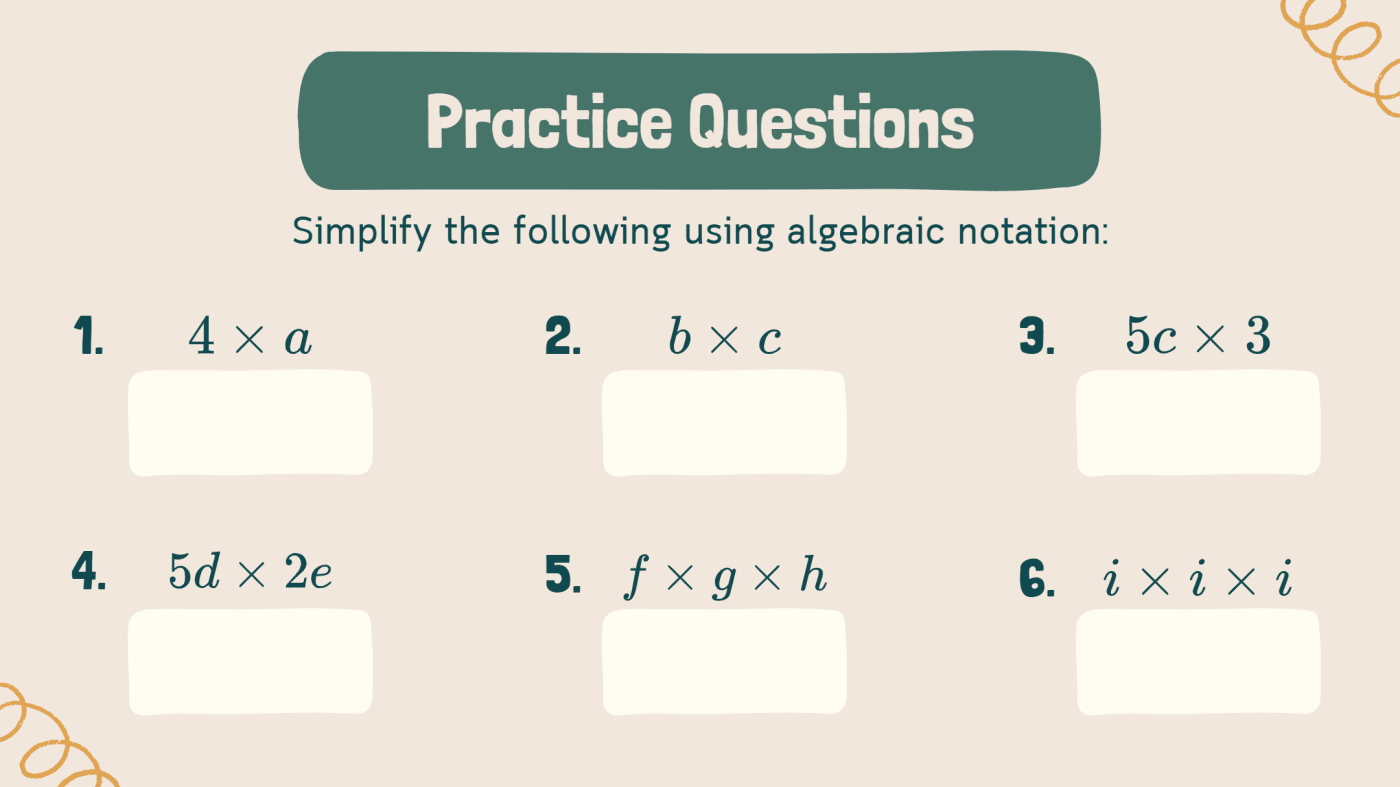
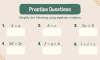
Before checking the answers, simplify each expression:
3 × x
5 × 2x
x × x
2x × 3y
4a × 2a
3x × 3x
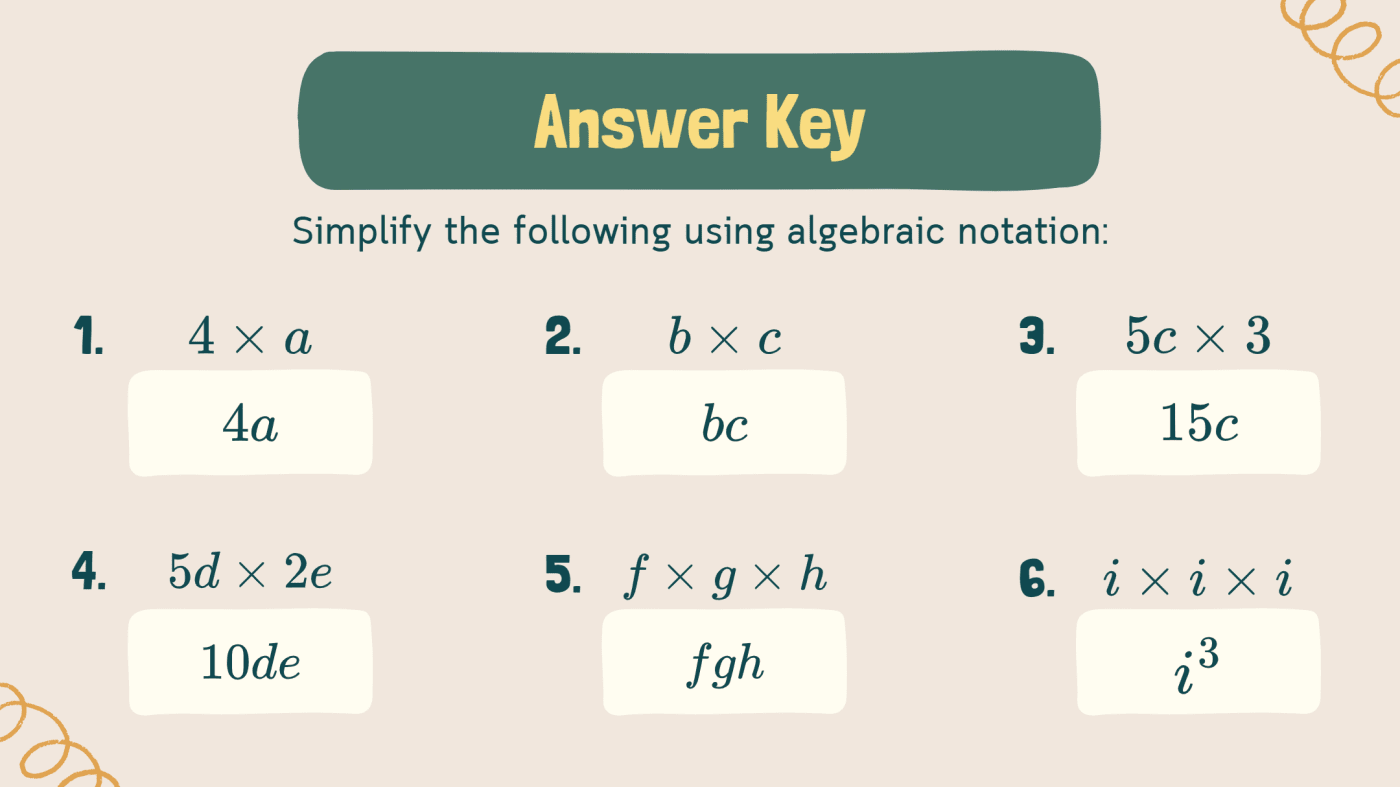
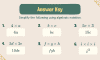
3x
10x
x²
6xy
8a²
9x²
If you made a mistake, don't just look at the answer and move on. Go back and identify which part caused the mistake: the coefficients, the variables, or the exponent.
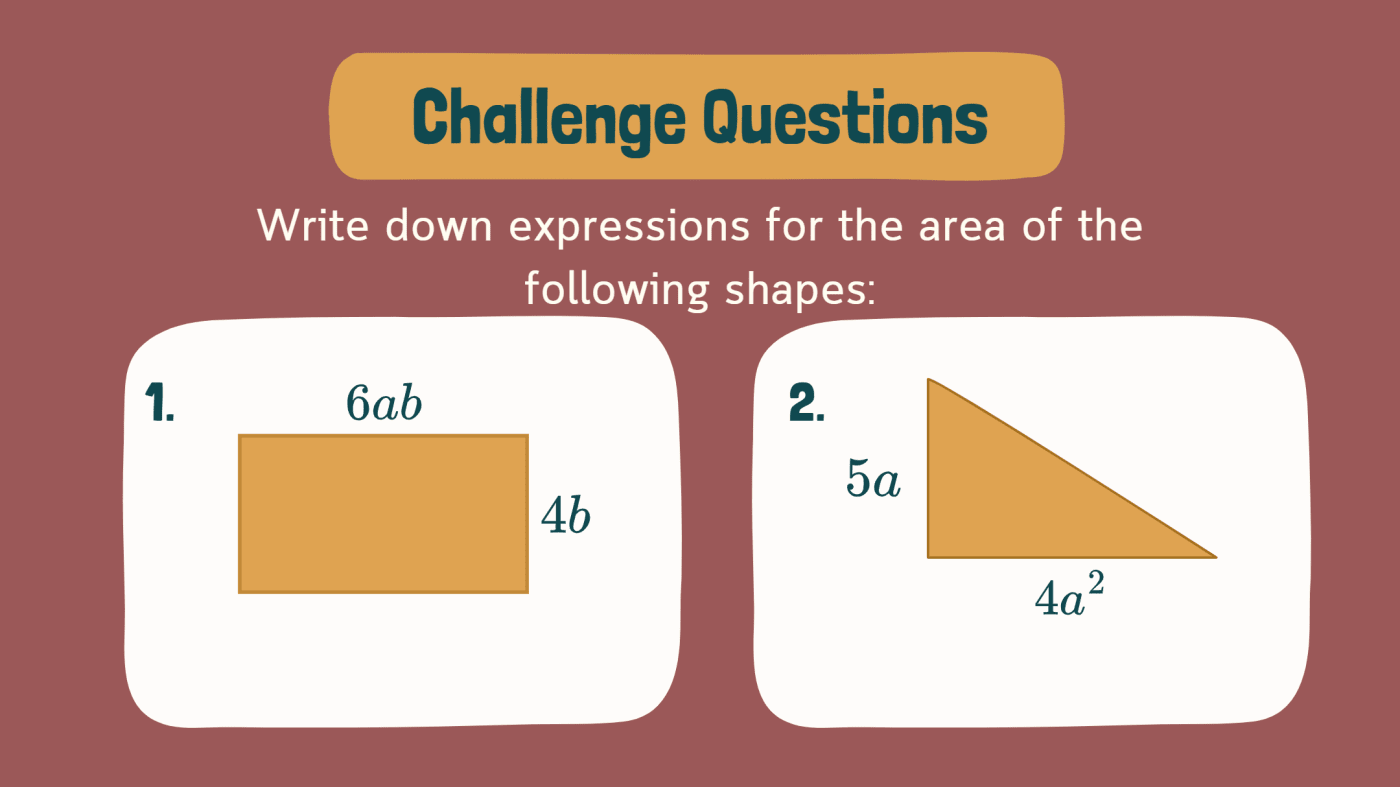
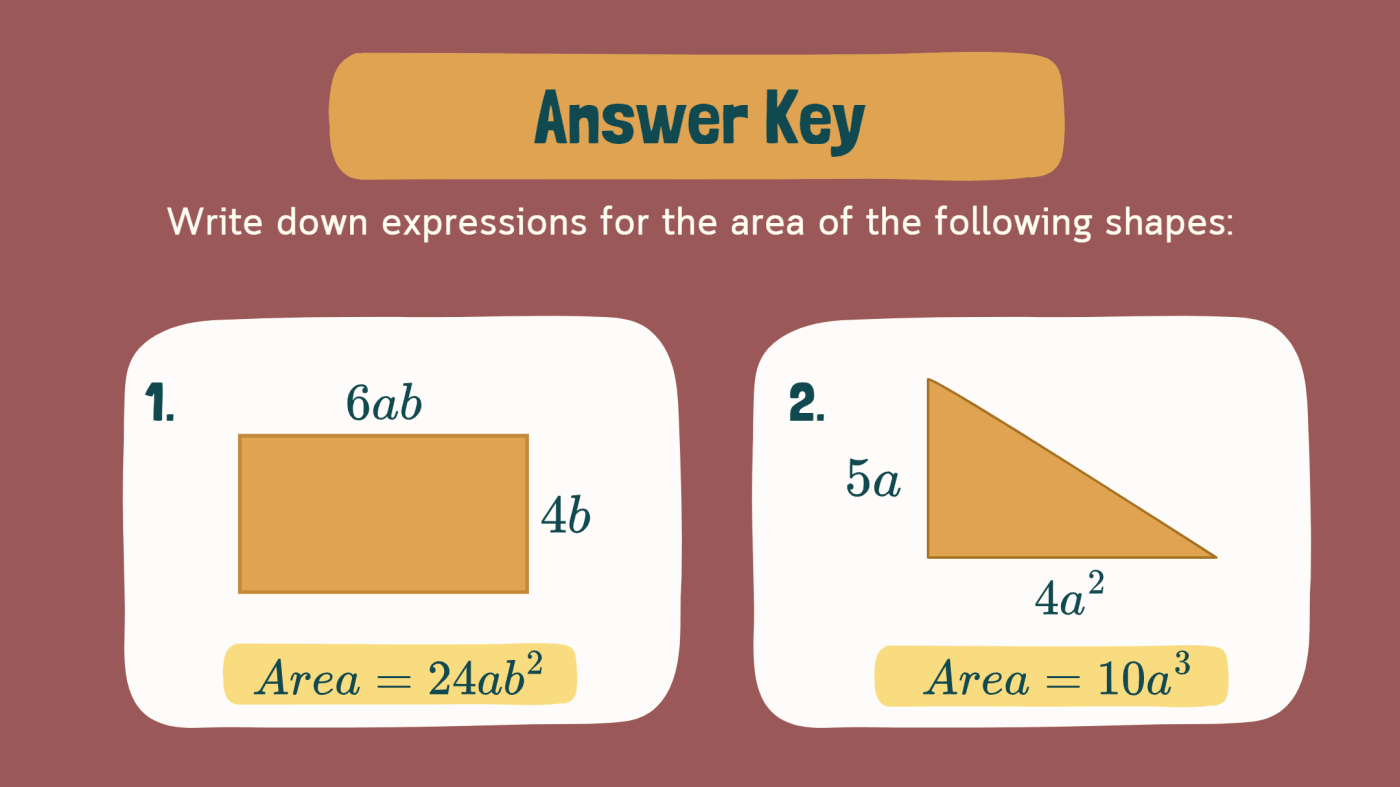
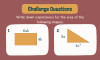
Algebraic notation is also useful when working with measurements.
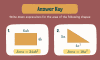
For a rectangle with length a and breadth b:
Area = a × b
In algebraic notation:
Area = ab
For a square with side length x:
Area = x × x
which becomes:
Area = x²
This is one reason algebraic notation is useful: a simple formula can describe a general situation without knowing the actual measurements.
A number multiplied by a variable is usually written without the × sign: 3 × x = 3x.
Multiply the numerical coefficients together.
When the same variable is multiplied by itself, use an exponent: x × x = x².
Different variables remain together: x × y = xy.
Always check whether your final expression is in its simplest form.
This lesson introduces one of the basic conventions used throughout algebra. Once this notation becomes familiar, multiplying and simplifying more complicated algebraic expressions becomes much easier.
Continue with the EduMat lesson slides to work through the examples and practice questions step by step.

Developer passionate about merging technology and creativity in software, games, websites, and more to create engaging experiences.


12 slides • 1 year ago

13 slides • 8 months ago

10 slides • 6 months ago

13 slides • 1 year ago