Artificial Intelligence and Machine Learning

mukesh juadi
hello Developer passionate about merging technology and creativity in software, games, websites, and more to create engaging experiences.
How is AI transforming our world? From the ethics of ChatGPT and deepfakes to privacy-safe Federated Learning and life-saving medical tech, discover the key trends defining the future of AI."
 Edumat.in
Artificial Intelligence & Machine Learning
Ethics, Privacy, Healthcare, and Explainable AI
Artificial Intelligence (AI) and Machine Learning (ML) are no longer futuristic ideas—they are part of our everyday lives. From chatbots and image generators to medical diagnosis and smart devices, AI is quietly shaping how we work, learn, and make decisions.
But with this rapid growth comes an important question: Are we building AI responsibly?
In this article, we explore four critical aspects of modern AI—ethics, privacy, healthcare applications, and the need for explainable systems.
The Ethics of Generative AI
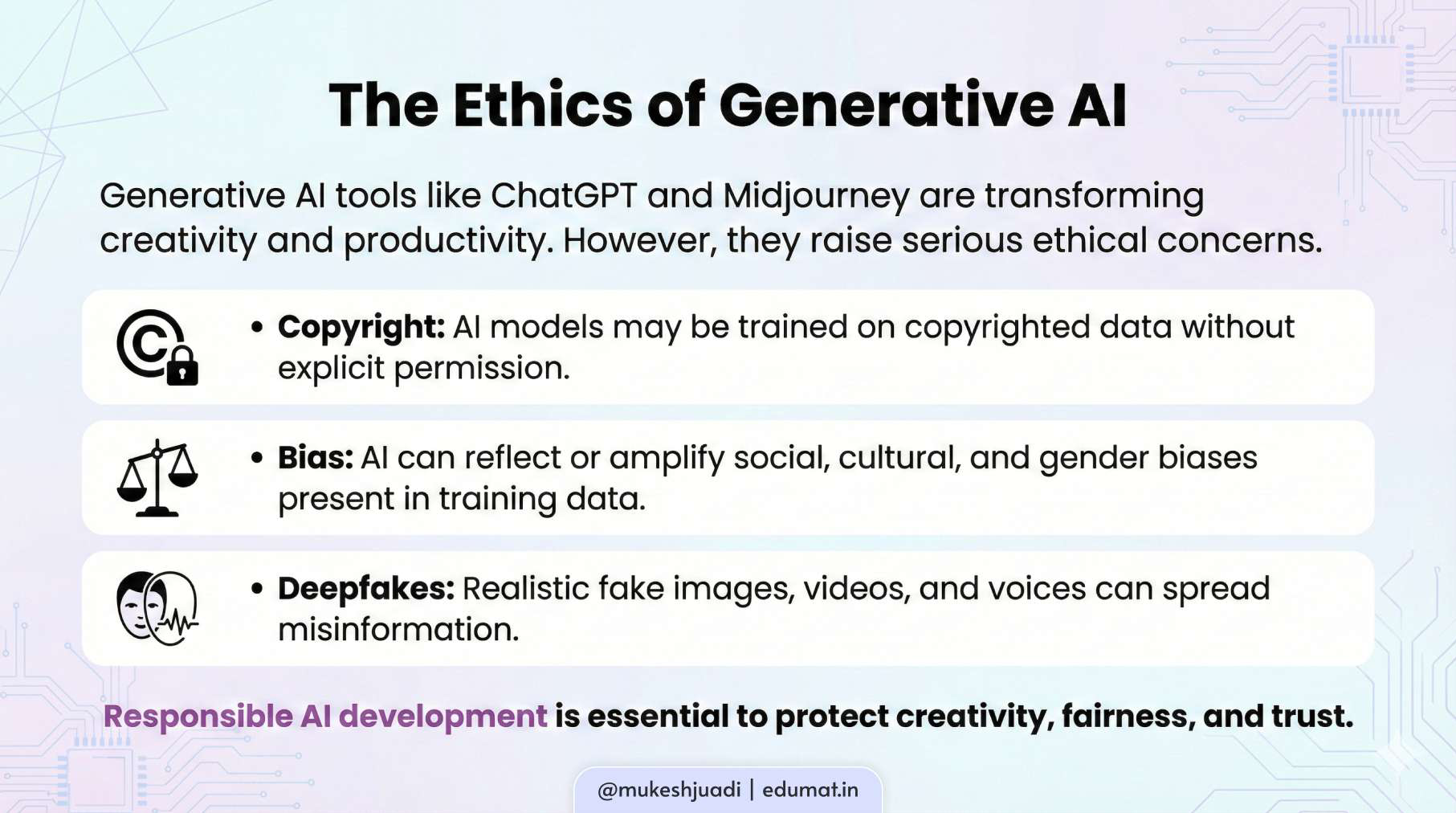
Generative AI tools such as ChatGPT and Midjourney have transformed digital creativity. They can write articles, design graphics, generate art, and even create realistic videos in seconds. While this technology is powerful and exciting, it also raises serious ethical concerns.
One major issue is copyright. Many AI models are trained on vast amounts of data collected from the internet, often without clear permission from original creators. This creates confusion around ownership and fair use.
Another concern is bias. AI systems learn from existing data, and if that data contains social, cultural, or gender bias, the AI may unknowingly reproduce or amplify it.
Perhaps the most alarming challenge is deepfakes—highly realistic fake images, videos, or audio that can spread misinformation, damage reputations, or manipulate public opinion.
To ensure AI benefits society, ethical guidelines and responsible development practices are essential. Trust in AI begins with fairness, transparency, and accountability.
Federated Learning: Privacy-First AI
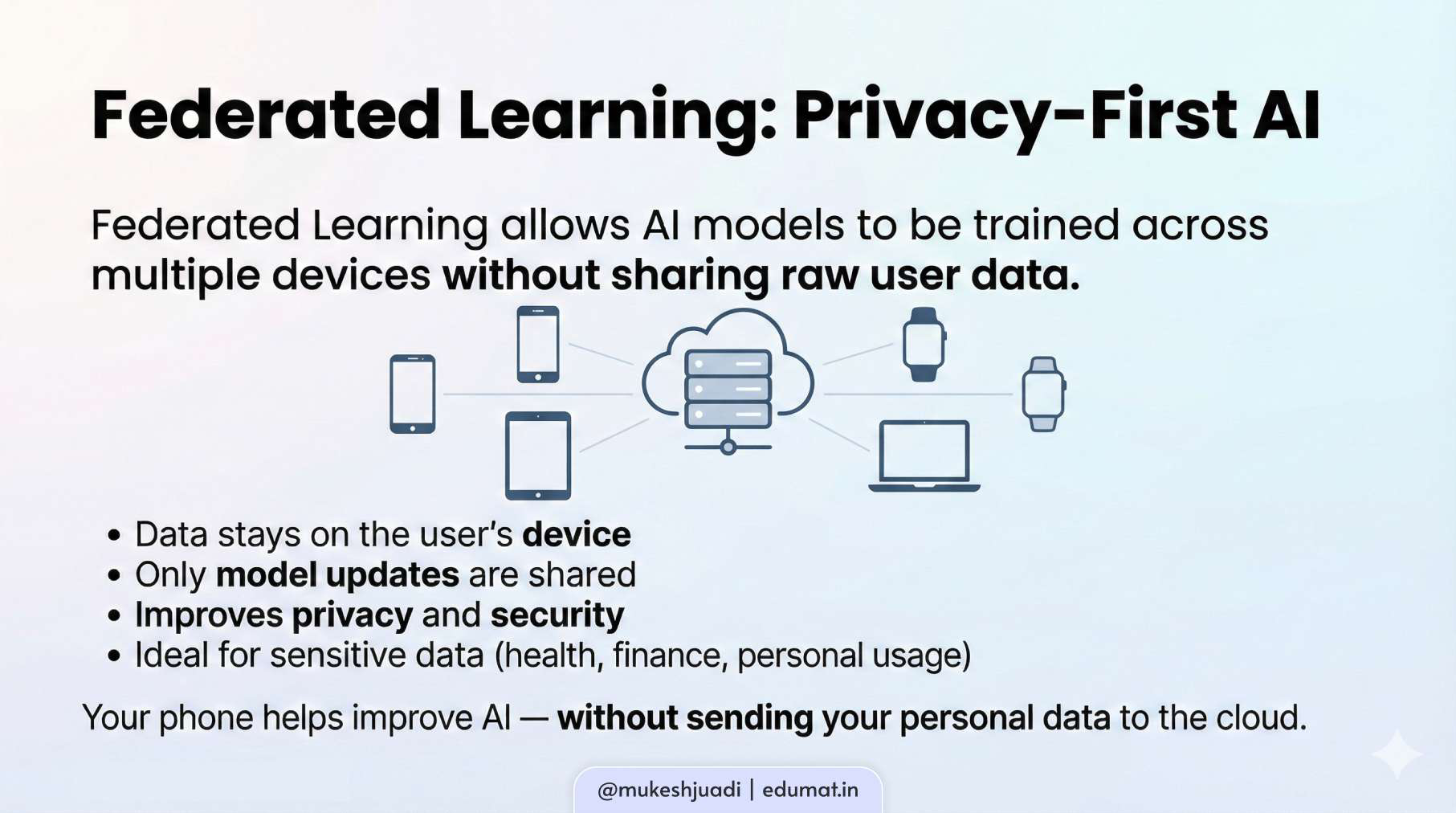
As AI becomes more integrated into our personal lives, privacy has become a top priority. This is where Federated Learning plays a crucial role.
Unlike traditional AI training methods, federated learning allows models to be trained across multiple devices without collecting raw user data in one central location. Instead, the data stays on the user’s device, and only the learning updates are shared.
This approach significantly reduces privacy risks while still allowing AI systems to improve over time. It is especially useful in sensitive areas such as healthcare, finance, and personal mobile devices.
In simple terms, federated learning allows your device to help train AI—without giving away your personal information.
AI in Healthcare: Saving Lives with Technology
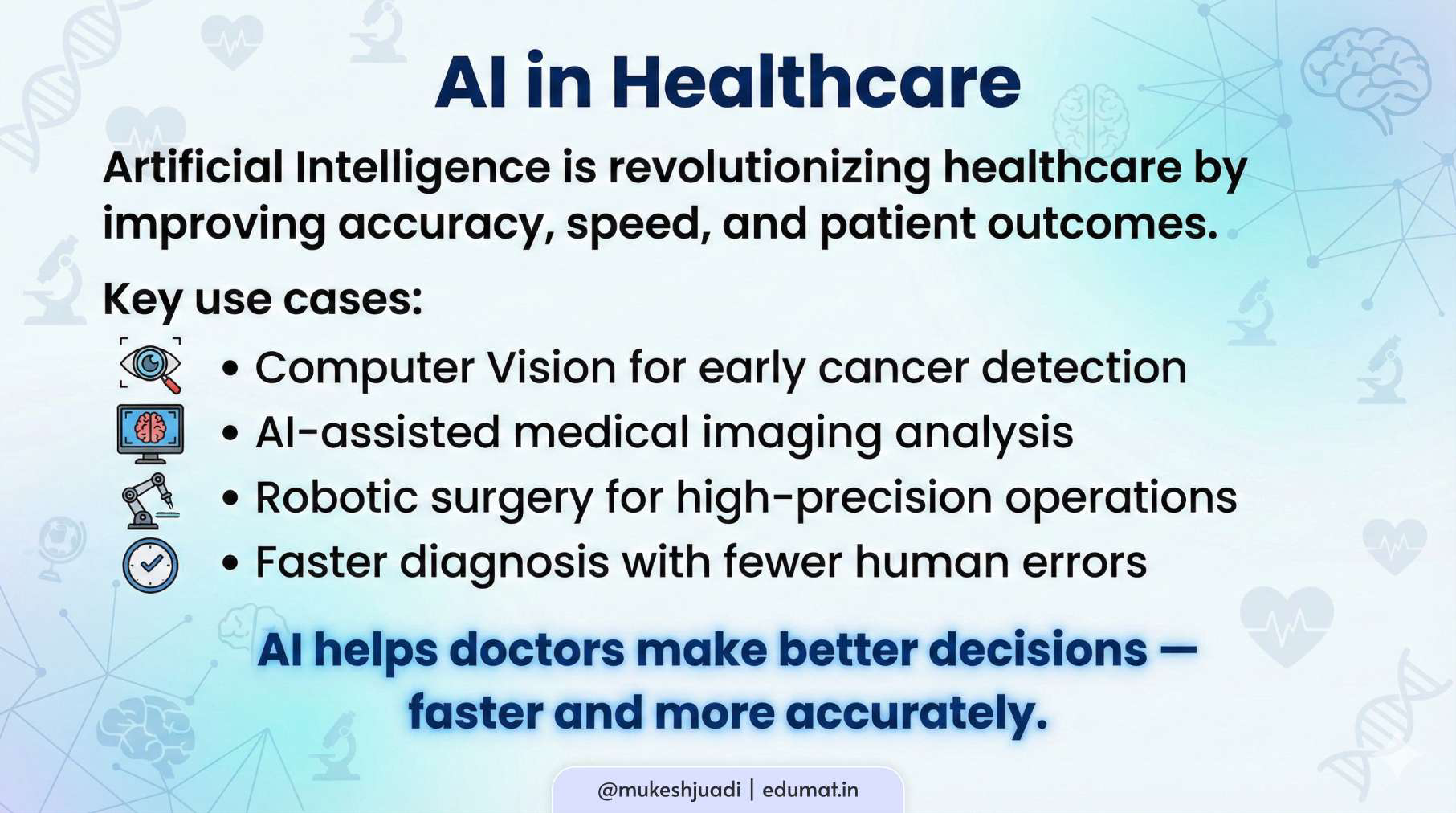
One of the most impactful applications of AI is in healthcare. Artificial Intelligence is helping doctors diagnose diseases earlier, treat patients more accurately, and reduce human error.
Computer vision systems can analyze medical images to detect early signs of cancer or other conditions that might be missed by the human eye. AI-powered tools can process thousands of scans quickly, improving both speed and accuracy.
Robotic surgery is another major breakthrough. AI-assisted robotic systems allow surgeons to perform complex procedures with incredible precision, reducing recovery time and improving patient outcomes.
Rather than replacing doctors, AI acts as a powerful assistant—supporting medical professionals and helping them make better, faster decisions.
Explainable AI (XAI): Opening the Black Box
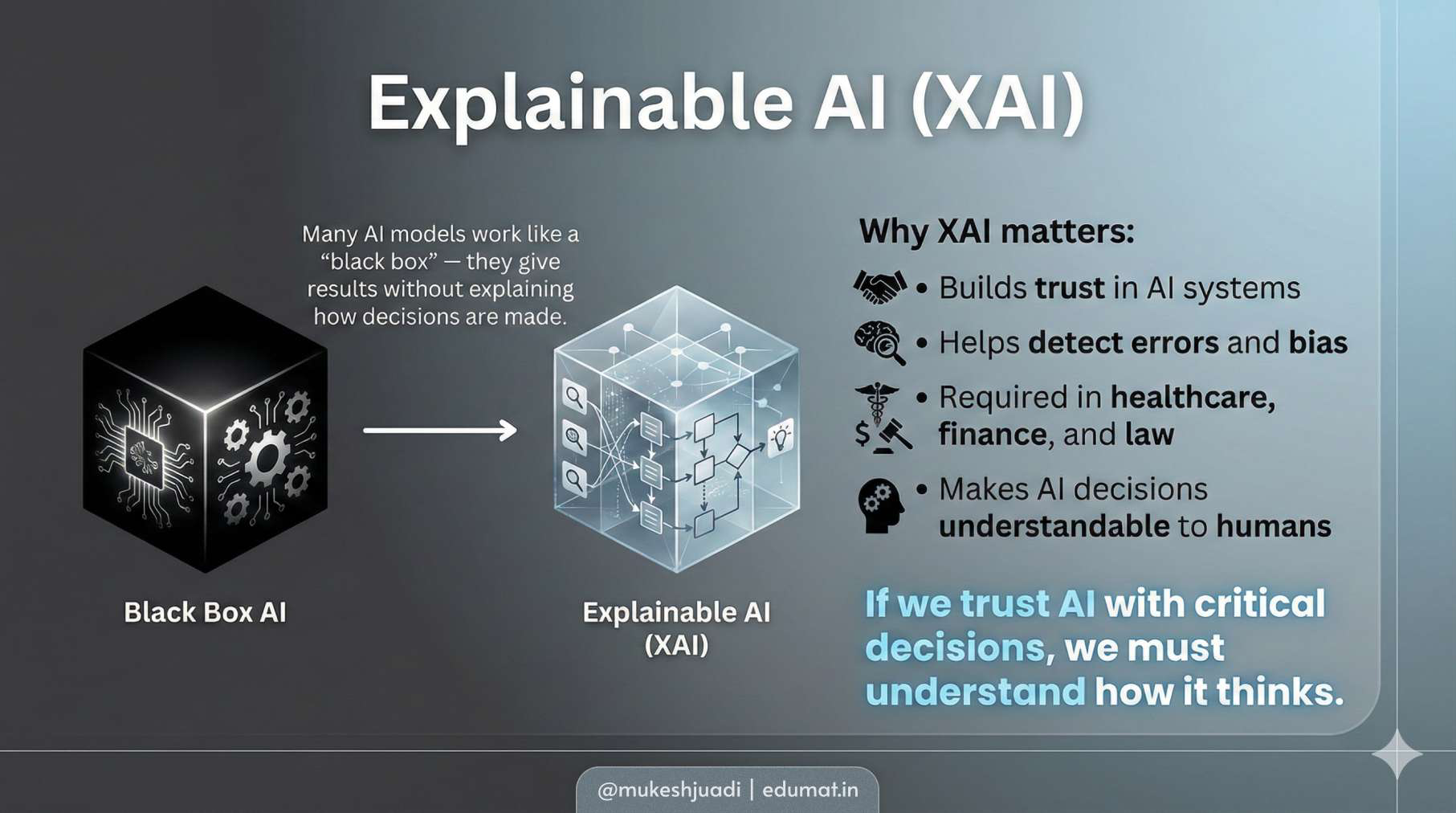
Many advanced AI models operate like a “black box.” They provide answers or predictions, but do not explain how those decisions were made. This lack of transparency can be dangerous, especially in fields like healthcare, finance, or law.
Explainable AI (XAI) focuses on making AI decisions understandable to humans. It helps users see why a model reached a particular conclusion, making it easier to detect errors, bias, or unfair outcomes.
XAI builds trust, improves accountability, and ensures that AI systems can be safely used in critical situations. If humans are expected to rely on AI, they must also be able to understand it.
The Future of AI: Responsible and Human-Centered
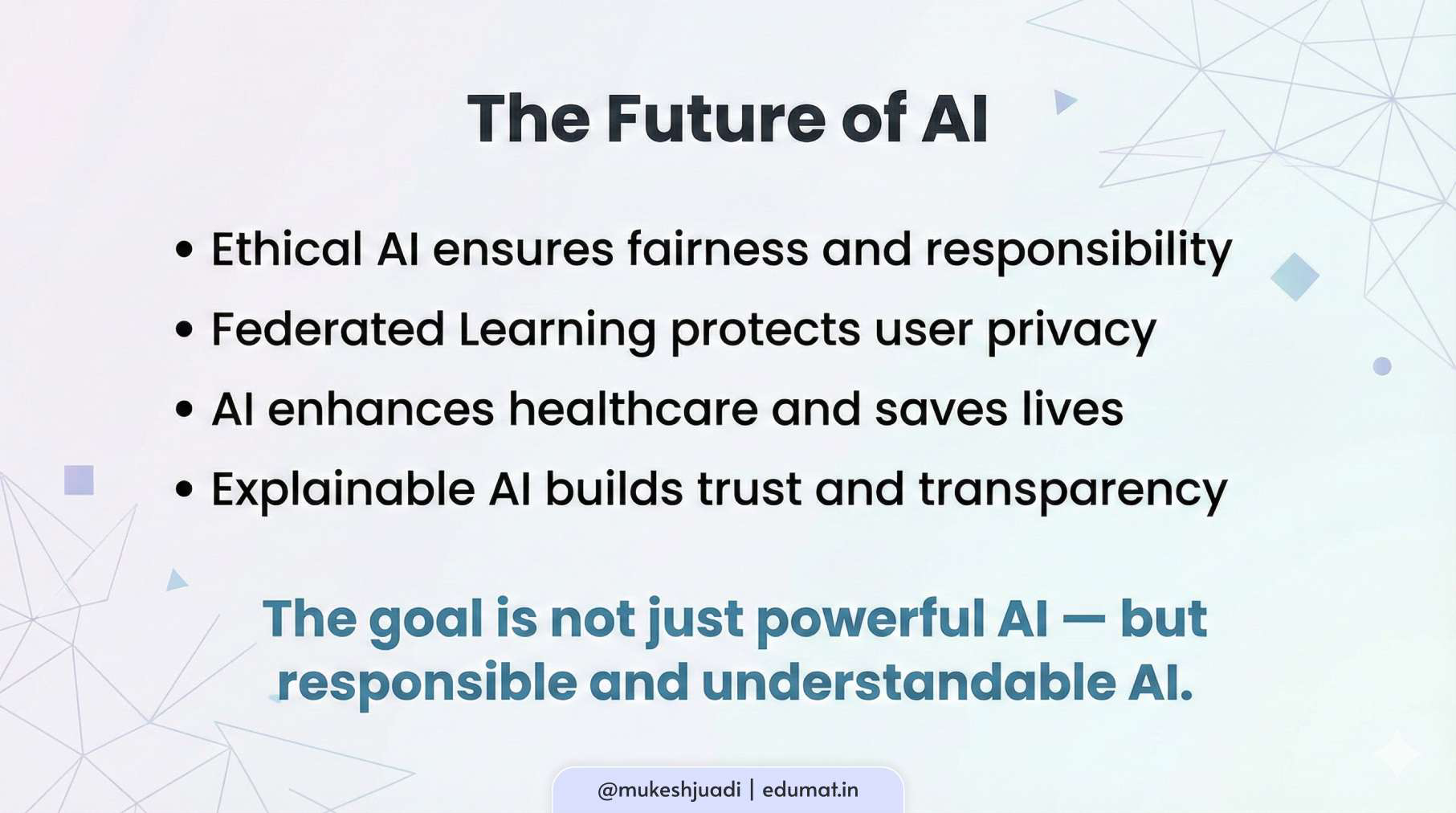
Artificial Intelligence is powerful, but power without responsibility can lead to harm. The future of AI is not just about building smarter machines—it is about building ethical, transparent, and human-centered systems.
Ethical AI protects creativity and fairness.
Federated learning safeguards privacy.
AI in healthcare saves lives.
Explainable AI builds trust.
When developed responsibly, AI has the potential to improve lives, support innovation, and create a better future for everyone.
Written by: @mukeshjuadi